Episode 211
Global Hustle, Local Lessons with David Hewitt
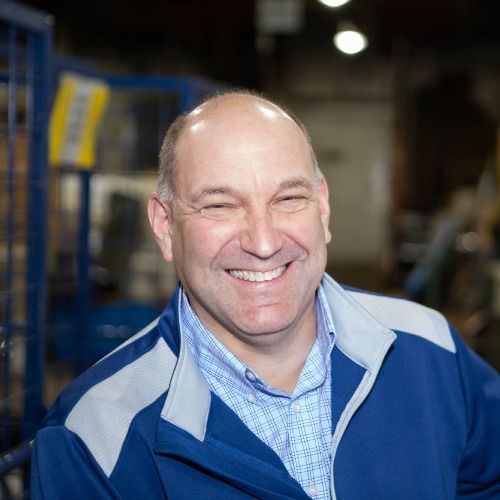
David Hewitt is one of the first guests we've had who's led teams across the world - China, Europe, Asia, and North America. This gives David a completely different perspective than many of us would have. One of the starkest differences is how people view work.
In China, people didn't mind hustling because it got them to a goal. In Europe, work hours are strict and asking someone to stay late is basically a non-starter. Very different perspectives.
One thing David shared with us is that you have to learn that people have different definitions of winning. As a leader, you need to be clear about what that looks like, share it, and hold people to that goal.
We discussed whether working from home actually kills innovation and if you can replicate team collaboration the way it would in an office. But on the flip side, many people are more productive working from home. Maybe a hybrid situation is the best option.
The real question is what your business actually needs to win and how to manage a workforce that isn't backing down on wanting autonomy and flexibility through working from home.
What matters most is being intentional about it. Define what winning means, show people how their work connects to that, and celebrate when you hit it. That works whether people are in an office or remote.
Highlights:
- Ideas flow differently when teams are in the office versus working remote.
- Taking on a challenge is different than being in over your head.
- Regularly check in with your team on goals and hold each person accountable.
- Move away from tenure and focus on results the next generation won't wait 20 years for a promotion.
Make sure to subscribe to Blue Collar BS. Share this episode with someone who needs to hear conversations about what's happening in the trades from people in the trades.
Get in touch with David:
Get in touch with us:
Check out the Blue Collar BS website.
Steve Doyle:
Brad Herda:
This podcast uses the following third-party services for analysis:
Podtrac - https://analytics.podtrac.com/privacy-policy-gdrp
OP3 - https://op3.dev/privacy
Transcript
Welcome back everyone to this episode of the BlueCallerBS Podcast. How you doing today, Brad?
Brad Herda (:Fantastic, Mr. Stephen Doyle and Detroit Motor City is doing what today?
Steve Doyle (:Uh, it is overcast, rainy, a little on the cooler, warmer side for a nice fall day, but. Cooler, warmer, it's kind of like, you know, when you woke up, you know, there's frost on the ground, but then it heated up. Nothing really, you know, nice overcast light rain. It's a nice day. It's a nice fall day. Nice fall day, a little top little top golf action later today, so, you know, going to enjoy it.
Brad Herda (:warmer side, perfect.
Brad Herda (:Perfect. Good for you. We got actually warm.
Brad Herda (:Okay, nice.
Steve Doyle (:and enjoy it. What do you got going on?
Brad Herda (:We got high winds going through and blowing all the leaves off the tree right now, which is great. And then we're supposed to have snow tomorrow. my, all my leaves, all my leaves will be covered with snow and I be looking at my lawn going, shit, I gotta get all that stuff done. And it's not happening today because now we're in that point of word that gets dark at like three o'clock in the afternoon. It's horrible. It is almost dark 30 already. Yes, I agree.
Steve Doyle (:Yeah baby, bring it on!
Steve Doyle (:you
Steve Doyle (:Yeah, should be almost dark now. So Brad, who do we get on the show today?
Brad Herda (:Today we have David Hewitt. He is a CEO, entrepreneur, leader, has traveled the world. He has been in North America, Europe, Asia, PE firms, USA, China, Japan, UK. He's been all over the place leading teams up to 272 employees all over the world.
And we are blessed to have his ability to be able to share his wisdom, his knowledge, his international experience with our audience today. So David, thank you for being on today's show.
David Hewitt (:Hey guys, thanks for having me.
Steve Doyle (:Yeah, So David, before I forget, which generation do you identify with?
David Hewitt (:Generation X.
Brad Herda (:And you confirmed that, correct?
David Hewitt (:I just asked Siri to confirm that and they said yeah that's right yeah I double checked
Steve Doyle (:Perfect. Perfect.
Brad Herda (:So how about, could you just give us a little bit rundown of your journey around the world a little bit as to how you ended up in where you are today out in Charlotte?
David Hewitt (:Yes, so born and educated in the UK, but not long into my career, I decided that I wanted a change. I wanted to go explore Asia. I wanted some challenge. And so my goal was to go backpack around Asia and then at the end of it, have a get a job, which, know, like most things when you're young, you're kind of bold and you don't think these things through and looking back on it as kind of a big risk.
Steve Doyle (:you
David Hewitt (:But I pulled it off. So I backpacked around Asia after starting my career in the UK in a commercial role. I then led a startup in China and that role expanded to Asia Pacific. Then as a general manager, then my business brought me to the US to do a turnaround. And then from that, I went to another company to do a step change. Then back to Europe for five years to be close to family, gaining the CEO role. And then two years ago, back to North America.
been a good journey.
Brad Herda (:That's awesome. And as you've gone through that opportunity, as I'm looking, just scrolling through your LinkedIn profile, what part of that journey did you find most challenging and most rewarding at the same time? Or maybe there are different aspects of it.
David Hewitt (:Yeah, my time in China, because I was in over my head. was there like, I was 26 years old. I landed in China, which is ridiculously different to anywhere else, at least that I've experienced. And not only was I managing people for the first time, I was doing it in a different culture and I was doing it remote from, from the headquarters. So I certainly recommend international.
experiences to people to progress their career. I wouldn't necessarily recommend it as their first management role, because doing that at the same time as being in China is tough. So that was really tough, but it was also extremely rewarding. Not only did I kind of learn a lot about management and leadership, but I learned a lot from China. And my career would not be where it is today had I not
Steve Doyle (:Yeah.
Steve Doyle (:Mm-hmm.
David Hewitt (:being given that opportunity and also pushed for that opportunity.
Brad Herda (:So were most of your subordinates or team members that you were leading in China, were they younger, older? Where were they from that perspective? then how do they accept foreign leadership would be the other question.
Steve Doyle (:So tell us.
David Hewitt (:Yeah.
David Hewitt (:So it was a mixture of people that were probably 10 or 15 years older than me. And then there was a couple of people who were around the same age, but the majority were older. I mean, I was 26 when I first started that role and they were tremendously patient with me, I think in hindsight, looking back on it because I was learning what I was doing on the job. How did they accept me? I think...
for the same reasons that I've been reasonably successful later in my career is I kind of lead by example and I work hard and I do what I say, I mean what I say and I do what I say. And those things I think help them accept me. And of course the key thing is results. Like quite quickly we started to be successful and that helps a tremendous amount. Gives you a lot of credibility when success follows quickly afterwards.
Steve Doyle (:Mm-hmm.
What would you say is like the one from a culture standpoint, but also if you think of the different age demographic standpoint, when you went from the UK to China, the workforce itself, what was kind of like that culture from a work dynamic, like work expectations, you know, we, grew up in a society, like we all have our own societal like makeup of what we think work is. How was that different?
between what you experience in the UK versus China.
David Hewitt (:good question. So in China, they are chasing a dream like you know, that we have this saying about the American dream like that's the Chinese dream like every year is a little bit better in China, but it only is better to those who hustle. And so they would work nonstop. And also business and personal relationships, they intermingle massively in China. And so there really was no time off, you're constantly working, but people were okay with that.
Steve Doyle (:Mm-hmm.
Steve Doyle (:Hmm.
Steve Doyle (:Mm-hmm.
David Hewitt (:there wasn't a lot of complaining about it. I mean, there wasn't a lot of conversation about, I'm working in my evening or I'm working on my weekend. They were very committed to doing whatever was necessary to achieve the company's success and therefore their personal individual growth. Contrast that with the UK or Europe, people obviously are lot more sensitive to, it's 5 p.m., I'm going home. But the...
But the opportunities in a place like China, and I think somewhat in the US still, are so great that if you do work hard and you do push yourself, you will get the rewards. And if you don't get that reward, then why put in the extra effort? So those were two contrasting perspectives.
Steve Doyle (:Mm-hmm.
Steve Doyle (:Hmm.
Brad Herda (:Yeah. Cause we all get the same 86,400 seconds every day. It's what we do with it. That makes the difference. Right.
Steve Doyle (:Yep.
Brad Herda (:I'm assuming you've been able to hire teams and you've also inherited teams as a young leader, because we're seeing Gen Z today being promoted to lead teams, not necessarily hiring teams. As you went into that environment as a young leader of a team that you inherited, what were some of the learning lessons that you...
Steve Doyle (:Hmm.
Brad Herda (:Things you might know now that you wish you knew then, or missteps that you might've had inheriting a team and leading it as a younger individual of an older team to help our, some of our Gen Z listeners that are leading teams today, they didn't get to pick them. They just get to do the job, right?
David Hewitt (:Yeah, great, great. Another great question. I wish I knew then that if you want to go fast, if you to go fast, you're to go alone. If you want to kind of bring people along with them, you've got to moderate your pace. You've to sometimes not reduce your expectations, but rise to your expectations for people. Because I would say in my early career, I held everyone to the same standard I held myself to.
which was put in the hours and win and expect high things of people. And when you're individually recruiting, when you're recruiting your entire team, that's kind of okay because you're recruiting people that meet your requirements and meet your characteristics. But when you inherit a team, not everyone has the same ambition. And I don't mean that as derogatory. Like success to them means getting home to their family. Success to them means having enough money.
Steve Doyle (:Mm hmm.
Steve Doyle (:Mm-hmm.
Steve Doyle (:Mm-hmm.
David Hewitt (:to enjoy life and that's it. And so holding everyone to the same kind of characteristics, ambitions that I had and standards that I had, that was probably quite tiring for a large part of my organization. And so, so realizing that you have to slow things down, sometimes spending an extensive amount of time communicating what you want to achieve and why. I think also patience. So you can...
Steve Doyle (:Mm-hmm.
David Hewitt (:sometimes achieve 80 % of the results with 50 % of the effort. I wish I could have, I'd learned that a little bit more when I was younger. It's, the third one is like nine times out 10, it's gonna be okay. Like things work themselves out. not, you know, it's not as, not every little thing is as important as you think it is. And I think as I've evolved as a leader, I realized that it's the critical few things that I do and I decide that really move the needle.
Steve Doyle (:Ha ha ha.
Steve Doyle (:Mm-hmm.
David Hewitt (:It's not the hundreds of decisions that you can make in a day. It's not reacting to everything you witnessed in a day. It's the handful of key decisions that you make in a week or a month that really move the needle. And I think those have been some of my evolutions.
Steve Doyle (:So when you look in today's workforce, so kind of pivoting to today's workforce, what are some trends that you're actually seeing now that are kind of like surprising?
David Hewitt (:that I felt like I was gonna sound like an old man. That's why I was kind of pausing with my answer because for the longest part of my career, I felt like I was the young generation, the young person in the room. And now it's finally caught up with me because there's the new generations coming to the workforce. And what surprises me, maybe not surprise, but suddenly I have to keep reminding myself of work-life balance, mental health.
David Hewitt (:What's the social focus of the company? Not being patient to get the next opportunity, like wanting it very quickly. I say it surprises me, but I kind of constantly remind myself that they come from a different generation with a different background and a different experience and therefore that's the way they're wired. Whereas I wasn't wired that way and I guess typically the generation I came from wasn't wired that way. You've got a new generation that has
Steve Doyle (:Mm-hmm.
Steve Doyle (:Mm-hmm.
David Hewitt (:access to so much information and they have access to so much opinion and they're looking for a company that cares about more so in Europe than North America, know, because obviously I've got experience in Asia, in Europe and North America, in Europe in particular, but I think in North America, the upcoming generation want to know what's your views on helping society? What's your views on ESG and things like that?
These are all things that I have to constantly remind myself that that matters to them.
Steve Doyle (:Mm-hmm.
And what have you seen kind of the as the younger generation keeps entering the workforce more and more, how have you seen the integration into the workplace? Meaning, know, the the expectations of like the millennials and the in the Gen X of the new generation coming in, of the Gen Z's coming into the workforce. What have you seen that's been positive, but also what have you seen like
Seriously, knock it off.
David Hewitt (:I think from a positive perspective, they're typically very entrepreneurial. They have good marketing skills. The access that they have to social media and then what that drives and that way they position their lives to their friends and their peers really gives them great marketing abilities, brand management, tech skills. And so I think there's a lot of skill sets that can be tapped into.
Steve Doyle (:Mm-hmm.
Brad Herda (:Mm-hmm.
Steve Doyle (:Mm-hmm.
David Hewitt (:as an employer. I think what drives people that all the generations somewhat crazy in places is that lack of patience. Like, you the idea of waiting three years until you get your next role. Like that, I feel like that's quite antiquated now. I feel like it's like people want it much, much, much quicker. And I think that drives people of a different generation a little bit crazy. I think the focus on mental health, know, and work life balance, but
Steve Doyle (:Mm-hmm.
David Hewitt (:But it's the world and generations are changing and I think we have to adapt to it. And they're probably onto something as well. Like the idea of working all hours and taking your phone on vacation and opening a laptop on vacation and not separating, they're probably onto something. I don't think it's all bad.
Brad Herda (:Yeah.
Steve Doyle (:Mm-hmm.
David Hewitt (:What do you think? What do you guys think? So like what... Yeah, please.
Brad Herda (:No, it's not in COVID. COVID accelerated that. know, the millennials, I think, had the right idea of that work-life balance. Pre-COVID, I think it was the wrong approach. And then during COVID, we learned how to be able to adapt to that and see that that is a good idea and a good opportunity. And now that we're coming out of the post-COVID era of we want
Steve Doyle (:Correct.
Brad Herda (:teams back in the office to create that culture and that sense of belonging and that community and that sense of purpose for some of the older leaders that want to be back to the way it was. We're creating a major animosity and problem. Like there's four companies here in Milwaukee that are trying to get already back in the office and people are quitting like, all over the place because they don't want to go back into the office.
They want to work from home. They want to be able to do their thing, but the leadership wants to be able to create that opportunity to transfer knowledge. Cause if I'm in an office, I can hear your conversation, David, in the cubicle next to me and I can learn from that and support one another. can't do that from my, my living room and their living room. Cause we're not on the same phone calls. We're not hearing all those things. Um, and you're in a high customer service world and, and some of those conversations are really important over here.
Steve Doyle (:Okay.
Brad Herda (:when that customer has a concern. And I guess, you, how are you guys seeing it in your world, David, as well from office, not in the office, and being able to handle that customer service and communicate those needs and wants across all folks if they're not in the office or if they are in the office.
Steve Doyle (:Mm-hmm.
David Hewitt (:Yes, so I would say the majority of our businesses and employees have reacted well to the idea of being back in the office. There is one or two parts of our business and I think it's generationally driven to where they're like they're quite resistant to being back in the office. But overall they've accepted it well. You know, I was obviously in Europe during COVID and post COVID before I came back to North America. They were much more resistant to the idea of being in the office and so hybrid really took off in Europe. I do...
Steve Doyle (:Mm-hmm.
David Hewitt (:believe, and I think it's similar to what you said, Brad, is that it's very hard to collaborate and to learn and to have shared goals if you're all working virtually. When you're working virtually, it's easy to get distracted. so we all enjoy the ability of having a two minute commute, right? From your bedroom to your office. But the reality is you lose so much interaction. And as a leader,
Steve Doyle (:You
David Hewitt (:How do you make a step change in an organization or how do you turn an organization around or how do you drive a new strategy if your employees are all working from home? It's very difficult. So I'm a big believer in being in the office. Come to the office, do a good job, make money, go spend that money in your personal time to go enjoy yourself.
Steve Doyle (:Mm-hmm.
David Hewitt (:I'm also a big believer that when you're off from work, you're completely off from work, like detach. Enjoy yourself.
Steve Doyle (:Yeah, I find that. So for me, going back to the previous question, I'll kind of blend it into this this last one. You know, for the hustlers go to the rewards, right? If you don't, I don't care about the generation like what generation you are. If you're going to hustle and you're going to put in the time, if you want to work 20 hours a day, work 20 hours a day. But you know, if you're kind of sitting back with the expectation of, hey, why not me? Why this person? Well, did this person out hustle you?
Did this person out work you? they have they, you know, what are they doing? so I, I often see a lot and regardless of which generation it's the, Hey, well, I've been here longer than this person, but I'm getting over, I'm getting passed over or I'm not getting a, a job quick enough or getting moved up the ladder quick enough. and this other person is why, and I often find that it's more because
Somebody is actually out hustling somebody else. It goes back to the...
Brad Herda (:Yeah, but I'm going to go back to what David said though, Steve, and argue with you a little bit, right? I can achieve more results with less effort, right? Cause you've seen people put 20 hours a weekend and get three hours of the work done.
Steve Doyle (:Good.
Well, you technically, yes.
Steve Doyle (:Well, then yes, correct. And that's not what I'm talking about, right? Because yeah, I'm not talking about time. I'm not talking about just sitting in the sitting in the seat, you know, smacking your hands on the keyboard, doing absolutely nothing. It's about there's a results aspect to it, right? If you're producing. Yes, if you're producing results and hustling to get those results. By far, I'm always going to reward that person more than somebody else that isn't putting in the effort.
Brad Herda (:Okay, I just want to get clarity here.
Brad Herda (:Okay, just want to get clarity on that for you.
Steve Doyle (:that the same level of effort. They could still be doing their job and doing it just fine, but I'm gonna, me personally, I'm gonna spend more time rewarding the person that's actually out hustling and moving the needle quicker.
And then going, and I also reward the person that prefers the human interaction versus, sit back, do things remote. Right? So I have that me personally, but can you do it remotely? Yeah, but we are, we're humans. We crave a human interaction, a face-to-face interaction. But I'm also fine with the, I don't need to be there every day.
David Hewitt (:Yeah.
Brad Herda (:You want your cake and eat it too is what I'm hearing.
Steve Doyle (:Well, I mean, I'm fine going in four days. I don't need to come in every day.
Brad Herda (:Really? How are you hustling if you're not coming in every day?
Steve Doyle (:Well, ooh, that's a great question.
Brad Herda (:Right? Your words, not mine.
Steve Doyle (:huh.
David Hewitt (:I do think...
Brad Herda (:So do you have a hybrid office right now, David, or what do you guys have?
Steve Doyle (:So.
David Hewitt (:We have, we have hybrid and one of our business units is actually, it's actually a talking point because we haven't got standardization, but the rest of the businesses is five days a week in the office with the exception of one. I do, I do think hybrid working probably isn't going to go away anytime, anytime soon. People have got a taste for it and they like it. And so as, as much as I prefer people to be in the office, I think if you want to attract and retain talent, you'd
Steve Doyle (:Mm-hmm.
David Hewitt (:probably have to keep an open mind to the discussion. And I think you've said three or four days, that might be the right balance of being effective. you know, having worked in Europe, Asia and North America, I do believe, I do feel quite strongly that like the US has to keep that kind of hustling mentality that no one, people, the government and societies are going to take care of me. I have to go and take care of myself. I have to go and earn it.
And we have to make sure that the upcoming generations maintains that hostile mentality, because I can tell you coming from Asia, they're hustling, they're busting ass. And so I think, you know, as we try and work this out and right-sides the approach here in the US, whatever we do, we can't lose that, you know, playing on your word, Steve, like that hustling mentality, because that's what made America great and that's what's going to keep America great.
Brad Herda (:It's it's finding ways to do it now if we can create the result faster and more effective To get that time back then then great that just gives us more time to then innovate to the next thing and that's the that's the part that I think We're we're somewhat losing we're losing some of that innovation in the hybrid world in my opinion because there's not the collaboration of what if
There's not the, there's not that pressure of, I see Billy over there doing something pretty cool. I can do that better than Billy. So let me see what I can do on that and present it. And now let me work with Billy to make this really cool thing or change this process or do something that innovation I think is stalling in many, many organizations that have gone to either a full remote or partial, partial remote type opportunity.
Steve Doyle (:Mm-hmm.
Brad Herda (:Cause there was a lot of stupid shit I did in my corporate life that that never would have happened if, if we didn't try something because we had people talking about, Hey, could we make this work? Could this work? It might let's try it. Let's see if it does and get the two or three people on board, run it through the system. See if we get the right output. No. Okay. Great. Let's back all the stuff out and let's redo it and go, Hey, I need to talk to the accounting person because I, I just sent out an invoice that I shouldn't have.
Steve Doyle (:you
Steve Doyle (:Mm-hmm.
David Hewitt (:I agree.
Brad Herda (:Can we just delete that please really quick for us? Because I can't delete it. I don't have right to delete that. I made a mistake. Can you do that for me? Try to do that with a phone call. Good luck.
David Hewitt (:I think just like so much gets lost in communication over email. Like the ability to have constructive confrontational discussions. Like if you're doing it in person, it's much more healthy than if you do it over like a Teams message or an email. like, yeah, I'm generally a supporter of being in the office. Let's come to work, let's win, let's make money and then go enjoy yourself in your personal time.
Steve Doyle (:Absolutely.
Brad Herda (:How are you communicating winning to your team on regular basis? Are you communicating that through a newsletter, regular communications, one-on-one conversations? How are you doing that with your team to define winning?
David Hewitt (:Well, we spent a large amount of time cultivating what is the definition of success and how we're going to achieve that success. And I've engaged a large amount of the workforce. Can you guys still hear me?
David Hewitt (:I lost you for a minute, so I went, I wasn't sure if it was my wifi, so I went and opened all the doors in case that was blocking the wifi. The video quality has not been great throughout the call. I'm not sure if you had the same problem.
Steve Doyle (:you
Steve Doyle (:no, it's totally fine. Yeah, you're fine.
David Hewitt (:Yeah, okay. Well, hopefully you can edit that part out. I spent a huge amount of time defining what success looks like for the organization and getting their input into the strategy so that they have kind of skin in the game. have...
David Hewitt (:Can you guys hear me?
Steve Doyle (:Yep. Yep. Yeah, you're good.
Brad Herda (:Yep. Now I can.
David Hewitt (:Yeah, I'm not sure what's going on.
David Hewitt (:Is the video help? Is the video?
Steve Doyle (:you're good. We'll add it there. So what? So we'll just make a note for carrier editor. When it gets like this, just keep going because it's recording locally. And it's, it's a, it'll, it'll catch up. Yep. So yeah, you're good. Well, we'll add it like these.
David Hewitt (:Okay. okay.
David Hewitt (:Yeah, I can't get a message saying that the network, the network's been lost.
Steve Doyle (:Yeah, you're fine. You're still going. Is he still going?
Brad Herda (:Mm.
David Hewitt (:Okay.
Steve Doyle (:Yeah. Okay.
Brad Herda (:I still have them on my end showing in the studio.
Steve Doyle (:All right, yep. Yep, so you're good. It does this every now and then.
David Hewitt (:All right. So take three. Yeah, OK, take three. So the question was, how do I create that winning culture? So we spent a huge amount of time engaged in the workforce to define what the success means to us, like what's the definition of success, and getting that input into how we're going to achieve it. And then from there, we tie the majority of the organization's KPIs.
Steve Doyle (:Mm-hmm.
David Hewitt (:to that success, to execute in that strategy. So it could be a productivity on a manufacturing line. It could be on time and in full for a warehouse. It could obviously be customer satisfaction and the customer care team. So you're creating connectivity between every single department and individual in that department to how they enable the success that you've defined with the entire organization, which in our case is ultimately EBITDA. And then we have...
Steve Doyle (:Mm-hmm.
David Hewitt (:visual management boards all around our business sites, sharing those KPIs. We tie incentive plans to those KPIs so everyone gets a financial reward and they're aware of that. And then we communicate how we're tracking holistically in a quarterly town hall. And typically what I do now is on a monthly basis, I'll send out a short note to the organization to say how the month did, and then we have a larger discussion on a quarterly town hall.
Steve Doyle (:Mm-hmm.
Steve Doyle (:Mm-hmm.
David Hewitt (:We're very black and white. have red and green color codes. You're winning or you're losing. And when we win, we celebrate. We celebrate success as frequently as we can.
Brad Herda (:Okay.
Steve Doyle (:Mm-hmm.
Steve Doyle (:Did it drop out? No? He's still there.
David Hewitt (:Back again.
Steve Doyle (:Yeah, there he is. Okay, he's back.
David Hewitt (:So I've just had like a minute of like lost connection. I'm not sure if it's my end. If it is, probably, yeah.
Steve Doyle (:Yeah, you're good.
Brad Herda (:Nope. It's all good. so I'll assume that you finished that conversation and then my, my follow-up question for you, David, on that is, you kind of talked earlier about how generations seem like they want to advance faster, go quicker. Are you, have you structured your, your pay as such that you're paying people for
Steve Doyle (:You're all good.
Brad Herda (:results that they're producing or more from a time in seat in order to achieve that promotion or opportunity.
David Hewitt (:Yeah, another great question for performance. Yeah, so that variable is tied to performance of the company, a portion of it's to the company and a portion of it's to their individual contributions to the business. I'm biased because of my background was at a young age, I got kind of senior roles. And so I'm a big believer that just sitting around for a long period of time,
isn't exclusively the definition of success, it's how do you drive value to the organization.
Steve Doyle (:Yes.
Brad Herda (:Okay, cool. So how do, if people want to connect with you or get in contact with you or learn more about your organization, how do they find you, David?
Steve Doyle (:Fantastic.
David Hewitt (:So LinkedIn is the best. So you can search David Hewitt, CEO, Charlotte, North Carolina. I'll pop up instantly.
Brad Herda (:Perfect. and, we're to go into, we're going to do our best here with the rapid fire questions.
Steve Doyle (:Fantastic.
Brad Herda (:So dumbest thing you ever heard in a meeting.
David Hewitt (:We can't control results.
Steve Doyle (:you
Brad Herda (:Okay. Beer, bourbon, or I'm a kombucha person.
Steve Doyle (:Oh man, Wow, okay.
David Hewitt (:Out of those three, bourbon.
Brad Herda (:Okay, coffee or energy drink.
David Hewitt (:coffee.
Brad Herda (:favorite go-to curse word.
David Hewitt (:Bollocks.
Brad Herda (:right, favorite candy?
David Hewitt (:Kit Kat.
Brad Herda (:text or call.
David Hewitt (:text.
Brad Herda (:You're a Gen X, right?
Steve Doyle (:That's a millennial move.
David Hewitt (:Hahahaha
Brad Herda (:Are you sure? Are you sure? You had to check. You had to ask Siri if you were a GenX and now you're saying tech is your preferred method. Ooh, I don't know. We might have to take away your GenX card.
Steve Doyle (:Yeah, that's a millennial move right there.
Brad Herda (:Early Bird or Night Owl
David Hewitt (:Early, early morning.
Brad Herda (:most overused phrase at work.
David Hewitt (:Let's take it offline.
Brad Herda (:best pizza topping.
David Hewitt (:our pepperoni.
Brad Herda (:Favorite movie quote.
David Hewitt (:Frankly, my dear, don't give a damn. I think just because my dad loved that movie and he quoted it quite a bit.
Brad Herda (:Okay. this is, this will be interesting for the, for the boss, for everyone else to hear it. Biggest pet peeve at work.
David Hewitt (:People saying they're gonna take it offline, because I know that that means they're not, they just don't know the answer. Or they don't wanna talk about it. Yeah.
Steve Doyle (:Ha!
Brad Herda (:they're not going to do it.
Steve Doyle (:Yep.
Brad Herda (:favorite music.
David Hewitt (:I love jazz. I love it. Yeah.
Brad Herda (:Okay. Favorite sport.
David Hewitt (:Football, but international English football. Yeah, soccer as you call it.
Steve Doyle (:Yeah.
Brad Herda (:Okay, I wasn't sure I wasn't sure if you're gonna go on the cricket path or some rugby or some other things wasn't sure so okay Bucket list vacation location
David Hewitt (:Yeah, rock your whippy second, yeah.
Steve Doyle (:Yeah. Yeah.
David Hewitt (:So I went to Burma, Miramar, and that is really hard to get to, but I absolutely loved it. I think beyond that, I haven't been, but I'd like to go to Cuba.
Steve Doyle (:Mm-hmm.
David Hewitt (:Hopefully I don't get arrested for saying that, but yes, if I could, that's where I'd go.
Brad Herda (:living or dead, who would you want to have a conversation with?
David Hewitt (:Well, my dad would be the easiest answer to that. But after that, it would be an American general called George Patton. I'd love to have a conversation with him. World War II general.
Steve Doyle (:Mmm.
Brad Herda (:Interesting. Interesting. Awesome. That would be a very interesting conversation for sure, because he was a very interesting guy. That will can well, I'll ask it anyhow. We'll go to the last question. You're a Gen X guy. We'll go to the Strout. Ginger or Mary Ann?
Steve Doyle (:Yep. Yeah. That's fantastic.
Steve Doyle (:Mm-hmm.
David Hewitt (:Yeah.
David Hewitt (:Ginger and Mary Ann.
Steve Doyle (:He doesn't get the reference Gilligan's Island TV show.
Brad Herda (:Gilgamesh
David Hewitt (:yeah. Don't get the reference. Yeah, sorry.
Brad Herda (:Nope. Okay. Well, we've, I wasn't sure I'd give it a shot, but it's okay. I'd give it a shot. we'll go from there, but, I guess thank you for sharing your knowledge and wisdom. thank you for sharing the experiences and the international flavor with our audience. cause I think it's important for us to recognize we aren't the only place on this planet and that with, right. With immigration, with different things, with opportunities with global.
Steve Doyle (:Yeah.
Steve Doyle (:Mm-hmm.
Brad Herda (:globalization of the workforce. It's really important to understand some of those things. So thank you for some of those insights.
David Hewitt (:Yeah, thanks for your time guys.
Steve Doyle (:Yeah. All right. Yes, thanks, David.
Brad Herda (:Alright, have an amazing weekend.
David Hewitt (:You too guys. Cheers!